Jensen Said Every Company Needs an OpenClaw Strategy. We Built the Blueprint Already.
NVIDIA launched NemoClaw at GTC. Here is the enterprise OpenClaw architecture we've already been running for real businesses.
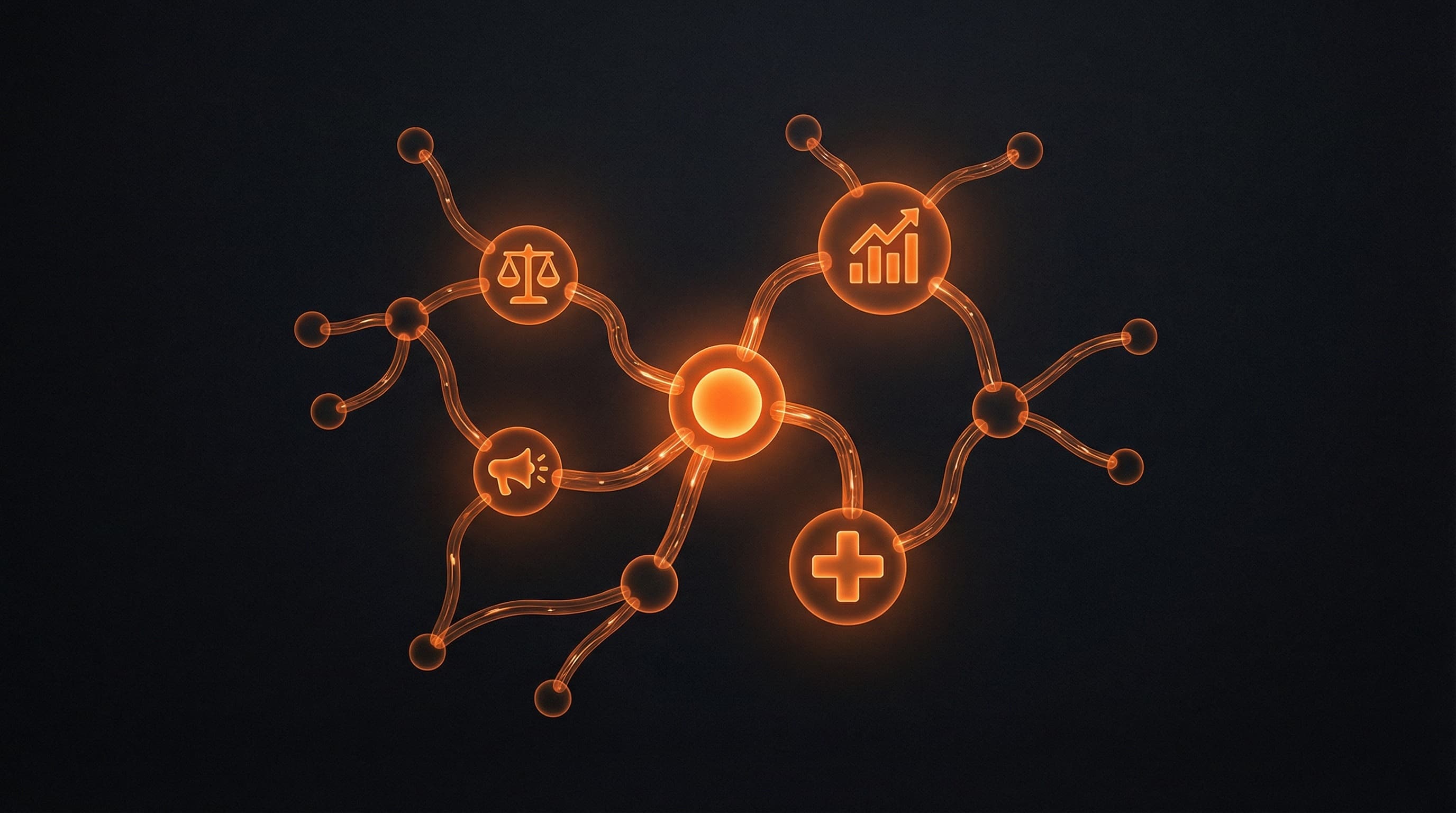
Yesterday at GTC, Jensen Huang said OpenClaw is "the most important software release probably ever" and "the most popular open source project in the history of humanity."
Then he dropped the line that matters for every CEO: "Every single company in the world today has to have an OpenClaw strategy."
Good.
Because the market needed that wake-up call.
At AI or Die, we were not waiting for permission. We already built the architecture, we already run it in live operations, and we already know what breaks when you move from demo to deployment.
NVIDIA announced NemoClaw - policy enforcement, network guardrails, and privacy routing through OpenShell runtime. That is exactly what the market needs at the security-runtime layer.
And to be very clear: we are not competing with NVIDIA.
NemoClaw is the enterprise runtime foundation. AI or Die is the deployment architecture, orchestration model, and managed-service layer that makes OpenClaw actually work inside real companies.
If you are a founder, operator, or IT leader reading this, here is the simple truth:
You don't have an AI chatbot problem. You have an AI workforce architecture problem.
We've Been Building This While Most Teams Were Still Prompting Chatbots
Most "enterprise AI" efforts today are still trapped in tool mode:
- add assistant
- connect docs
- pray permissions don't leak
- call it strategy
That is not a strategy. That is a pilot with branding.
An OpenClaw strategy means designing your company around autonomous specialists with scoped access, auditable behavior, and hard boundaries.
At AI or Die, our MVP architecture is already designed, approved, and deployed around one non-negotiable rule:
Containment first. Autonomy second. Speed third.
Because if you get containment wrong, autonomy becomes liability.
Our Enterprise MVP Architecture (What We Run Today)
Here is the baseline stack we use:
1) One OpenClaw instance per client
No multi-tenant gamble. No shared blast radius. Each client gets isolated infrastructure and independent control.
2) Docker container per agent (sandbox: "agent")
Every non-main session runs in its own container. Each agent gets a clean execution boundary.
3) Main session on host, all others sandboxed
The main administrative session can run unsandboxed on host with controlled admin access through Tailscale. Everything else is boxed.
4) Bind-mount filesystem isolation
Legal cannot see Marketing's files. Marketing cannot see Finance. This is not policy text. It is physical separation at the mount layer.
5) Per-agent network controls
Default state: no network. If an agent needs outbound access, we opt it in intentionally. No "open internet by default" nonsense.
6) Chief of Staff agent pattern
We use a CoS pattern to coordinate planning, escalation, and cross-agent priorities. You need command structure, not agent chaos.
7) Inter-agent communication via sessions_send
Agents can coordinate, but communication is explicit and traceable. No invisible backchannels.
8) Remote operations via Tailscale
AI or Die manages deployments, health, and maintenance through secure remote access workflows.
9) Health-check cron + deployment automation
This is operations, not theater. Monitoring, schedules, and scripts are mandatory.
10) Cost profile that SMBs can actually run
Mac Mini M4 + model subscriptions can run in the ~$200-400/month model range for many practical use cases.
If you expected a seven-figure AI platform budget to get started, you're reading old internet.
The Real Model: Human-First Agent Architecture
Most teams ask the wrong first question: "Which AI tool should we buy?"
The better question: "How should intelligence be organized around the human decision-maker?"
Our answer is a human-first architecture where the person is at the center and is surrounded by specialized long-running agents.
Typical setup includes 10+ specialists:
- Legal
- Medical
- Financial
- Education
- Fitness
- Personal Assistant
- Business Manager
- Career Coach
- Home Manager
- Creative
Each of these agents is not a chat window. Each has:
- specialized skills
- recurring operating rhythm (daily/weekly/monthly)
- task stack and priorities
- ability to spawn sub-agents for heavier work
This is the key shift: from conversational AI to operational AI.
The model behaves less like "ask me anything" and more like "here is your team, here is their mission, here is what they shipped while you slept."
Access Model: Badges, Not Binary Permissions
The way most organizations handle AI access today is either too open or too rigid.
Too open: one connected assistant sees everything. Too rigid: brittle RBAC trees that block useful work.
We treat access like building badges.
An agent gets:
- a defined role
- a scoped data perimeter
- specific cross-domain sharing paths
By default, data is isolated. Sharing is explicit and granular.
Example:
- Medical agent can share selected health signals with Fitness agent.
- Financial agent can share selected revenue context with Business Manager.
- Everyone else stays out.
That model maps to how humans already understand trust boundaries.
And we pair it with a human control layer where the user can:
- hire/fire agents
- pause/promote agents
- inspect and adjust permissions visually
That's how adoption happens in real life: controllable systems, not black boxes.
Corporate Scale: Personal → Team → Company
Once the human-first model works at the individual level, we extend it to organizations through a three-layer architecture.
Layer 1: Personal
One agent layer per employee. This handles personal workflows, role-specific context, and private operating data.
Layer 2: Team
Shared team agents for Marketing, Sales, Ops, Product, Legal, etc. This layer handles domain coordination and team memory.
Layer 3: Company
Cross-functional company agents that operate on org-wide priorities, reporting, and policy-aligned automation.
This structure avoids two common failures:
- everything trapped in personal silos
- everything dumped into a giant shared brain
You need both independence and coordination.
Context-Based Access Scoping Beats Static RBAC
Static RBAC sounds good in architecture slides and fails in living organizations.
Real work is contextual.
Access should adapt based on:
- WHO is requesting
- WHAT the request is about
- WHY the request is being made
That means a Team agent can request temporary scoped access to another domain for a specific task, with automatic revocation after completion.
We separate:
- standing permissions (persistent)
- request permissions (temporary and purpose-scoped)
This gives speed without permanent overexposure.
And yes, this is where NemoClaw matters massively. Security runtime support for policy and routing strengthens exactly this type of design.
Again: complementary layers. NVIDIA hardens runtime. AI or Die operationalizes architecture.
Why This Matters Right Now (Not Next Year)
This is where most exec teams get stuck:
"We should wait until standards settle."
No.
Standards are settling in public right now, and velocity is compounding. If Jensen is publicly saying every company needs an OpenClaw strategy, your competitors are already moving.
The companies that win this cycle won't be the ones with the fanciest prompts. They'll be the ones that can answer five brutally practical questions:
- How do we isolate agent execution safely?
- How do we scope data by default and share intentionally?
- How do we monitor network and policy behavior continuously?
- How do we coordinate agents under clear command structure?
- How do we run this at a cost structure that survives reality?
If your team cannot answer those, you do not have a strategy yet. You have enthusiasm.
The Managed Service Gap Nobody Wants to Admit
Here's the uncomfortable part: Most companies do not need another AI feature. They need someone to build and run the whole system correctly.
That is the gap AI or Die fills.
We design the architecture. We deploy the stack. We enforce isolation and policy. We run health checks and maintenance. We help clients implement operating patterns that turn agents into output.
NemoClaw improves enterprise-grade runtime security. OpenClaw provides the open framework. AI or Die delivers execution.
Three layers. One outcome: usable AI workforce infrastructure.
This Is Not Theory - We Run Our Own Business On It
Our best proof is not a pitch deck. It's operation.
Inside Tomek Group, we already run specialized agent structures to execute recurring work across functions. That operating model has informed how we deploy for clients.
When your own business depends on the architecture, your standards get strict fast. You stop tolerating vague promises. You build for uptime, boundaries, and accountability.
That is exactly how we approach client deployments.
What to Do Next
If you are serious about OpenClaw adoption, stop treating this as a single-tool procurement decision.
Treat it like what it is: a core operating-system decision for how work gets done in your company.
Start with:
- one bounded deployment
- clear isolation rules
- explicit permission model
- one human decision owner
- measurable output goals
Then scale from personal to team to company.
That is the path that works.
Final Word
NVIDIA just put a giant spotlight on this category. Good. The market needed a forcing function.
But spotlight is not implementation.
If every company now needs an OpenClaw strategy, the next question is obvious:
Who is actually ready to deploy one safely, fast, and in production?
We are.
If you want to build your OpenClaw architecture on top of NemoClaw-grade security principles - and skip the painful trial-and-error phase - talk to me.
Visit aiordie.now and let's build your AI workforce properly.
Ready to stop hiring and start deploying?
Book a Free Consult